
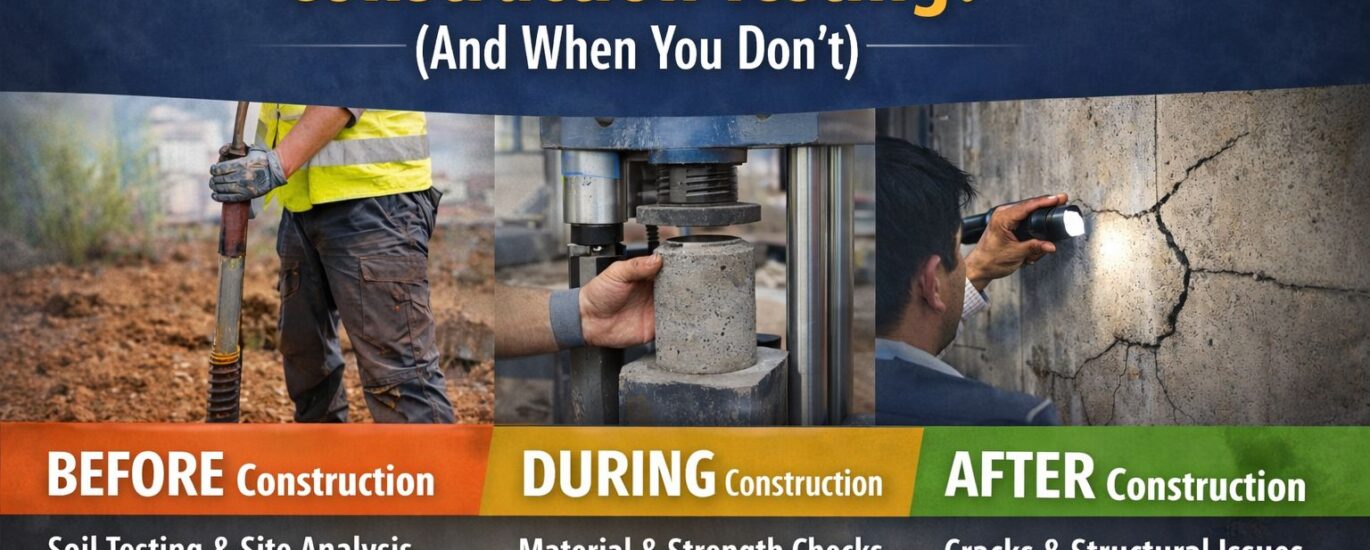
Most people think construction testing is something you do only when there’s a problem. That’s already too late. The truth is, testing is needed at three critical stages—before, during, and after construction.
Before construction, soil testing helps you understand what you’re building on. Skip this, and you risk foundation issues that are expensive to fix later.
During construction, material testing (like concrete strength or steel quality) ensures what’s being used matches the required standards. This is where most quality compromises happen—quietly.
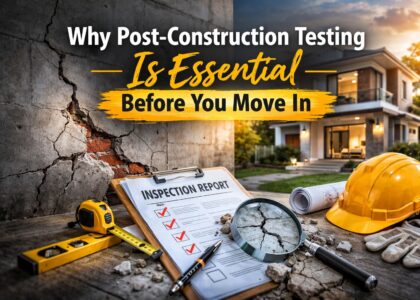
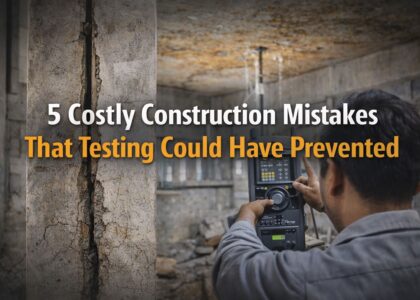
After construction, testing is usually triggered by visible issues—cracks, leakage, or structural concerns. At this stage, testing becomes diagnostic, not preventive.
Now here’s the part most people won’t tell you:
Not every project needs every test.
Small residential builds may not need extensive audits. But the moment your project involves multiple floors, high load, or long-term investment, testing stops being optional—it becomes protection.
The real mistake isn’t avoiding testing.
It’s calling for it too late.
If you’re unsure, the right approach is simple:
Get clarity early. It’s always cheaper than correction.