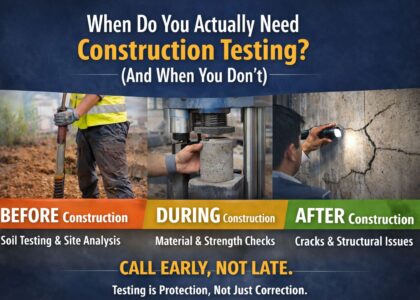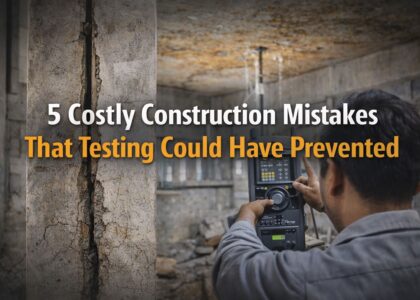


A lot of people hesitate to request a structural audit because they don’t know what happens next. The process is simpler than you think.
It starts with a site visit, where engineers assess visible conditions—cracks, leakages, wear, or any structural concerns.
Next comes data collection. This may include measurements, drawings (if available), and identifying areas that need deeper testing.
Depending on the situation, non-destructive tests like rebound hammer or ultrasonic testing may be conducted. These help evaluate strength without damaging the structure.
Once the data is collected, everything is analysed and compiled into a detailed report.
This report typically includes:
- Current condition of the structure
- Identified risks or weak points
- Recommendations for repair, strengthening, or maintenance
The most important part?
Clarity.
After the audit, you’re no longer guessing. You know what needs attention, what can wait, and what must be fixed immediately.
A structural audit is not about finding faults.
It’s about understanding reality—before it turns into a problem.
And that clarity is what helps you take the right next step.